Rendering on the Web
There are many rendering mode in web development: Server Side Rendering (SSR), Static Site Generator (SSG), Client Side Rendering (CSR), Hydration, Partial Hydration, and Island Architecture.
This site use Static Site Generator (SSG) rendering mode. For example, Astro convert the markdown and necessary assets into static HTML file.
In this section, I would like to focus on discussing Hydration and Island Architecture.
Hydration
Dan Abramov, the maintainer of ReactJS give the simple term of Hydration.
Hydration is like watering the “dry” HTML with the “water” of interactivity and event handlers.
Island Architecture
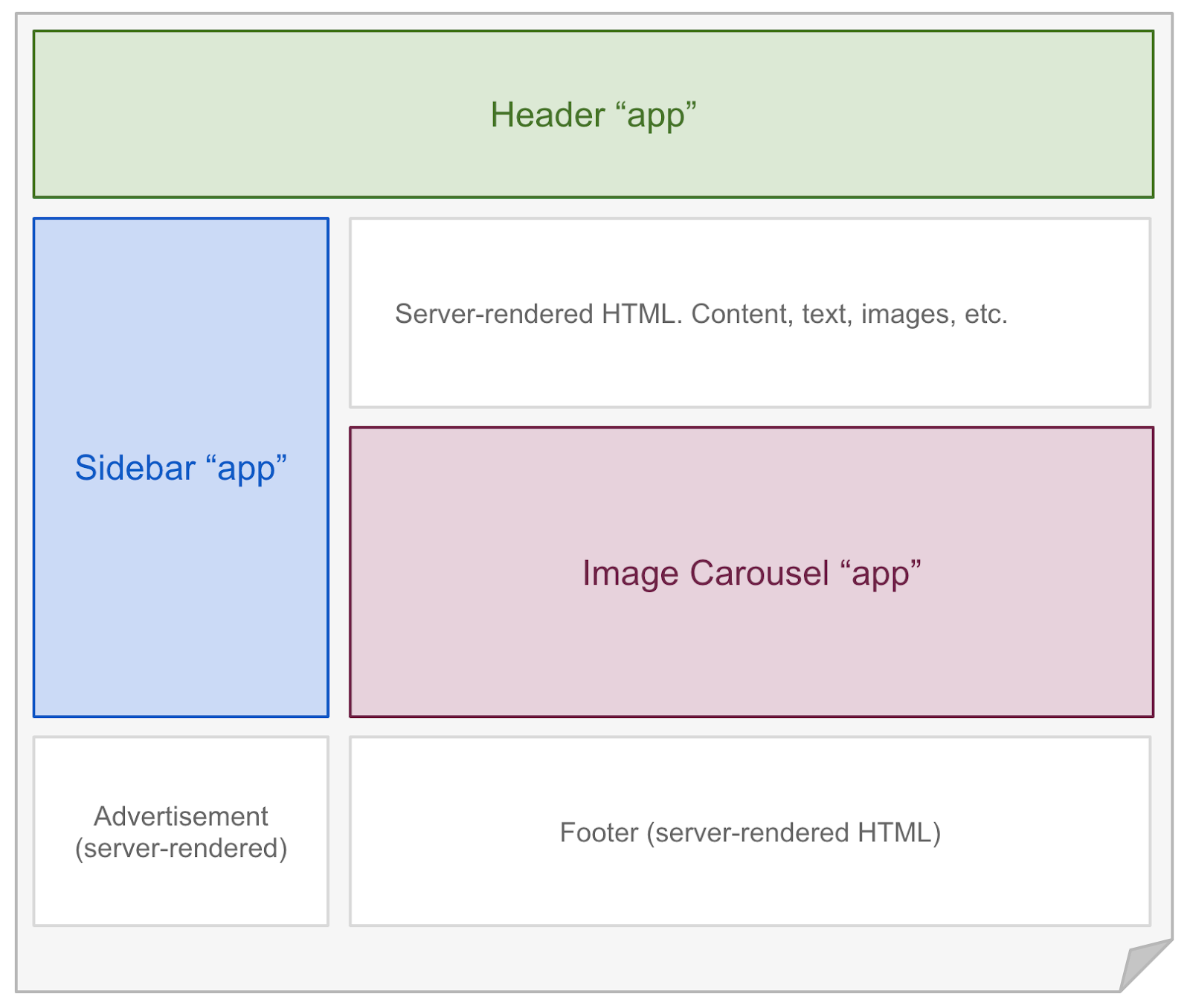
Jason Miller, the creator of PreactJS gives the term of Island Architecture. In my opinion, The Island Architecture bring the same concept with Hydration: render HTML pages on server then inject placeholders or slots highly dynamic regions. Here's the more detail.
The general idea of an “Islands” architecture is deceptively simple: render HTML pages on the server, and inject placeholders or slots around highly dynamic regions. These placeholders/slots contain the server-rendered HTML output from their corresponding widget. They denote regions that can then be "hydrated" on the client into small self-contained widgets, reusing their server-rendered initial HTML.
You can think of this like a static HTML document that contains multiple separate embedded applications.